Jaw pain linked to the temporomandibular joints (TMJs) often improves when a dentist finds the cause and reduces the strain on the jaw joints and muscles. A common first step is a dental evaluation, which may lead to a custom night guard, a bite adjustment, or a referral to another provider. You do not need to wait for the pain to become severe. If your jaw hurts often, clicks or locks, or your headaches seem to start in your jaw, a visit to a dentist in West Covina is a reasonable place to begin.
What is TMJ, and why does it hurt?
Your TMJs connect your lower jaw to your skull, one on each side of your face, just in front of your ears. Muscles around these joints control chewing and opening your mouth. When the joints or muscles become strained, the tension can spread to your temples, forehead, behind your eyes, ear, and neck. Many people describe this as a headache that starts in the jaw.
TMJ problems are not always caused by the teeth alone. Stress, clenching, grinding, posture, injury, and a bite that does not fit well can all play a part. That is why a good evaluation looks at more than one thing at a time.
What helps TMJ and jaw pain?
Treatment depends on the cause, so there is no single answer for everyone. Common options that dentists use include:
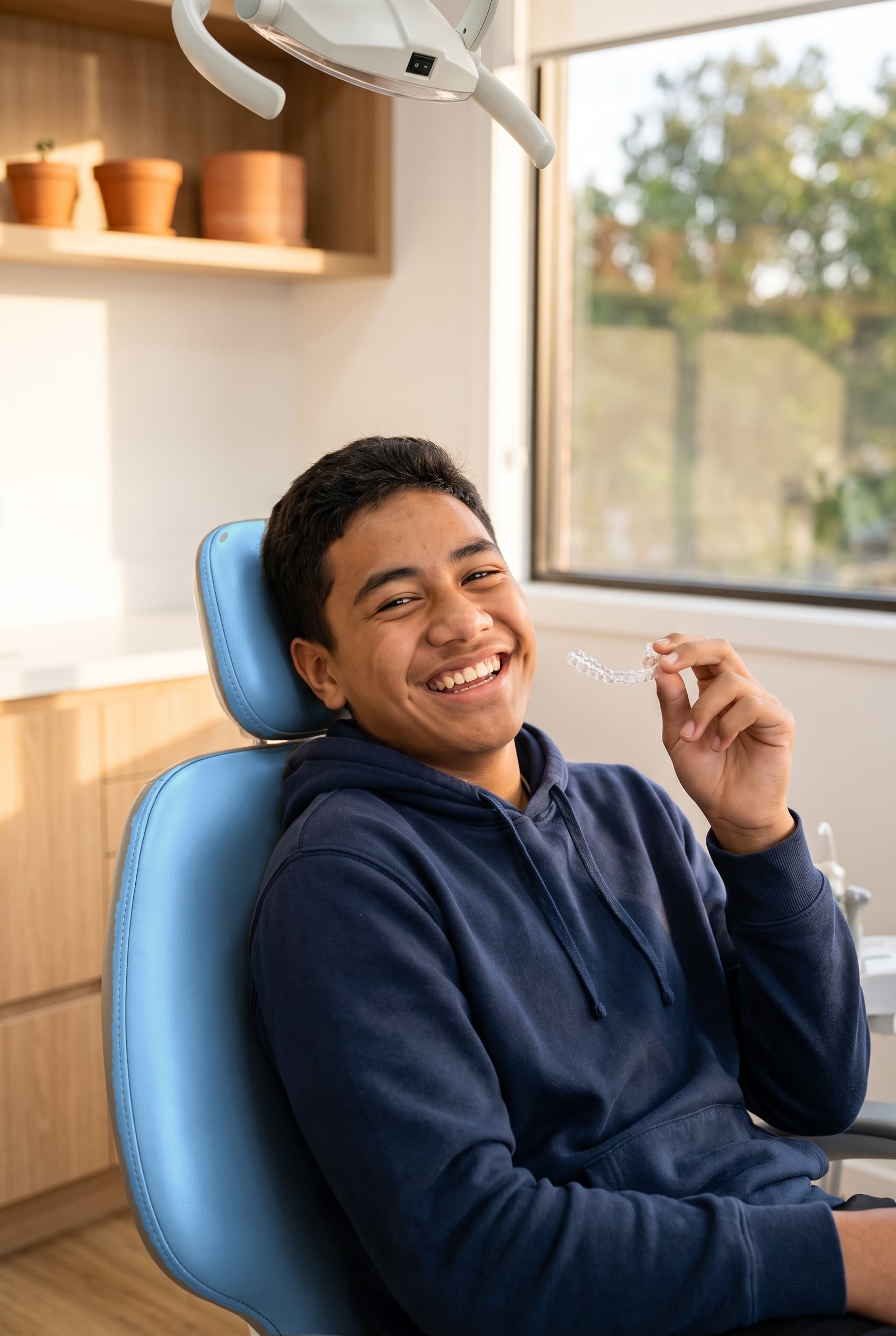
- Custom oral appliances. A night guard or TMJ splint is fitted to your teeth. It can reduce strain on the jaw muscles and help with nighttime clenching or grinding.
- Bite equilibration. Small adjustments to the contact points of your teeth can create a more balanced bite, so the jaw muscles do not have to overwork.
- Physical therapy referrals. When muscle pain needs more rehabilitation, your dentist may recommend a physical therapist who works with jaw and facial pain.
- Restorative or orthodontic correction. When a structural bite problem contributes to your symptoms, crowns, orthodontics, or other restorations may help.
Most patients start with the least invasive option, such as a night guard or a bite adjustment. Your dentist will recommend a plan based on what they find. Some people notice relief within days of starting a night guard. Others need several weeks, especially if muscle tension has built up over a long time.
Simple habits can also help while you are being evaluated. Many dentists suggest eating softer foods for a while, avoiding chewing gum, and resting your jaw by keeping your teeth apart and your tongue resting gently behind your upper front teeth. Talk with your dentist before making big changes, so the advice fits your situation.
When should I see a dentist for jaw pain?
It is worth scheduling an evaluation if you have frequent jaw or facial pain, or headaches along with any of these:
- Jaw pain, especially in the morning or after chewing
- Ear pain or a feeling of fullness in the ear
- Neck or shoulder tension
- Soreness in the face or temples
- Clicking, popping, or locking of the jaw
- Teeth that look worn, chipped, or flattened
- You wake up with a sore jaw, or someone has told you that you grind or clench at night
Some symptoms need prompt care rather than a routine visit. Contact a dentist or physician soon if your jaw locks and will not open or close, if you have swelling in the face or jaw, if you have a fever with jaw pain, or if you have trouble swallowing or breathing. Seek emergency care right away for a sudden, severe headache, weakness, numbness, trouble speaking, or chest pain. These are not typical TMJ symptoms, and they need to be checked quickly.
What happens at a TMJ evaluation?
Your first visit focuses on finding the cause of your symptoms. The dentist reviews your history and examines your jaw joints, muscles, bite, and tooth wear. Depending on your situation, the evaluation may include:
- Digital X-rays, which show the teeth and jaw with less radiation than traditional film
- 3D CBCT imaging, which gives a three-dimensional view of the jaw joints and bone
- Digital scans and impressions, which record your bite without traditional trays
Our office also offers laser dentistry and local numbing options, so the visit can be as comfortable as possible. After the evaluation, your dentist explains what they found and which options fit your situation. You can ask questions at each step.
If your headaches may have causes outside of dentistry, your dentist will tell you and may suggest a referral to your physician so those other causes can be checked.
How do I know if the treatment is working?
Your dentist will schedule follow-up visits to check how your appliance fits, whether your bite feels comfortable, and whether your symptoms are changing. While you adjust to a new night guard, wear it as directed and bring it in if the fit feels off. Let the office know if your headaches or jaw pain get worse. If you have been referred to a physical therapist or physician, keep those appointments so your care stays coordinated.
You can learn more about this kind of care on our Migraine and TMJ Headache Relief page.
How much does TMJ treatment cost?
The cost depends on the treatment your dentist recommends. A custom night guard, a bite adjustment, and a plan that includes restorative or orthodontic work differ in scope, so they are priced differently. The best way to understand your costs is to have the evaluation first, so your dentist can explain the options that fit your findings.
If you are a new patient without insurance, our $59 New Patient Special includes a comprehensive exam, digital X-rays, and a professional cleaning. It can be a good first step to find out what is causing your symptoms.
For larger treatment plans, we offer flexible financing with monthly payment plans for elective and major procedures.
Does insurance cover TMJ treatment?
Coverage depends on your specific plan and on the type of treatment you need. TMJ and dental-related headache care can sometimes be billed under medical insurance, dental insurance, or both. We cannot promise what your plan will cover, but our team can help you understand your benefits before treatment begins.
We accept PPO and indemnity plans, Medi-Cal, Denti-Cal, Smile California, CalOptima, and most major dental insurance plans. If you have one of these, bring your card and let us know your plan when you book so we can check your benefits before your visit.
Why patients choose Harmony Dental Care
Harmony Dental Care has served patients in West Covina for 20 years. Dr. Nguyen, a DMD, manages TMJ and migraine evaluations and focuses on the connection between the bite, jaw joints, and facial muscles. Dr. Khaef also provides bruxism and TMJ diagnosis and treatment. Our approach is to look at the jaw, bite, and facial muscles together, and to build a plan around your triggers and symptoms. We also coordinate with physicians and physical therapists when headaches need more than dental treatment.
For imaging and bite records, we use 3D CBCT imaging, iTero digital scanning, digital X-rays, and laser dentistry.
How do I book a TMJ or jaw pain visit?
You can call us at (626) 858-3305 or book a visit online. We welcome new patients of all ages. Our office is open Monday through Friday, 9:00 AM to 6:00 PM, and is closed Saturday and Sunday.
When you call, mention that you are seeking help for jaw pain or headaches so we can schedule the right visit. Bring a list of your symptoms, when they started, and any medicines you take.
Harmony Dental Care 148 N Grand Ave, West Covina, CA 91791
Questions patients ask
Can TMJ pain go away on its own?
Some mild jaw soreness improves over time, especially when a trigger such as stress or a long day of chewing passes. Pain that keeps coming back, limits how far you can open your mouth, or affects sleep is worth an evaluation.
Is a night guard the only treatment for TMJ?
No. A night guard is one common option, but the right treatment depends on the cause. Your dentist may recommend a bite adjustment, physical therapy, or restorative work instead, or in addition.
Do I need X-rays or a 3D scan for jaw pain?
Not always. Your dentist decides which images are needed after the exam. Digital X-rays and 3D CBCT imaging give different views, and only the ones that help your evaluation are used.
Can a dentist help with headaches?
Sometimes. When headaches are linked to the bite, jaw joints, or facial muscles, a dentist can evaluate and treat those causes. If other causes are possible, your dentist can refer you to your physician.