
What is dental bonding?
Dental bonding is a cosmetic and restorative procedure in which a tooth-colored composite resin is applied directly to the surface of a tooth. The material is shaped, hardened with a curing light, and then polished to blend with the rest of your smile.
Because the resin is built up on the tooth rather than fitted over it, bonding usually requires little or no drilling. Most bonding visits take about 30 to 60 minutes per tooth. Many patients can have a tooth repaired in a single appointment.
At Harmony Dental Care in West Covina, our dentists use composite bonding materials and careful color matching so the repair looks like natural tooth structure.
Who is dental bonding good for?
Dental bonding can help people who want to improve the look of a tooth or repair minor damage. Your dentist will tell you whether bonding is a good fit after an exam.
Bonding is often a good choice when:
- A tooth is chipped on the edge or corner
- A small crack needs to be sealed or covered
- There are small gaps between teeth
- A tooth is discolored and does not respond well to whitening alone
- A tooth has uneven length or a shape that needs smoothing
- A tooth has a worn edge that needs to be rebuilt
Bonding is also used alongside other treatments. Some teeth that have significant wear, cracks, or fractures may need bonding, a crown, a veneer, or in some cases a root canal, depending on how severe the damage is. Our team evaluates the tooth first and then recommends the option that fits the problem.
Common reasons for dental bonding
People come in for bonding for many different reasons. Some of the most common include:
- Chips and small fractures from biting hard foods or from an accident
- Cracks that affect the look of a front tooth
- Gaps between the front teeth or between a tooth and its neighbor
- Stains and discoloration that remain after whitening
- Root exposure near the gum line, in some cases
- Worn teeth from grinding or age
If you are not sure which category your concern falls into, a consultation is the best place to start. Our dentists can look at the tooth, explain what they see, and talk through your options.
Dental bonding vs. veneers: which is right for you?
Dental bonding and porcelain veneers can both improve the appearance of your smile, but they differ in cost, longevity, and how much of the tooth is prepared.
In general, bonding is more conservative. It typically needs minimal removal of enamel and can be done in one visit. Veneers are thin shells, usually made of porcelain, that cover the front surface of the teeth. They often need more preparation and are made in a dental lab or with in-office milling.
Veneers may be a better match when a larger area needs correction or when a more extensive smile change is planned. Bonding may be a better match when the goal is a targeted repair. Dr. Khaef or Dr. Nguyen will recommend the best option based on how much correction you need, your budget, and your long-term goals for your smile.
Harmony Dental Care also offers Lumineers (no-prep veneers), professional Zoom whitening, Invisalign clear aligners, tooth-colored restorations, and complete smile makeovers, so you can discuss how bonding fits into a broader plan.
What to expect during your bonding visit
Bonding is a step-by-step process, and most patients find it straightforward. Here is what typically happens.
Step 1: Shade selection and preparation
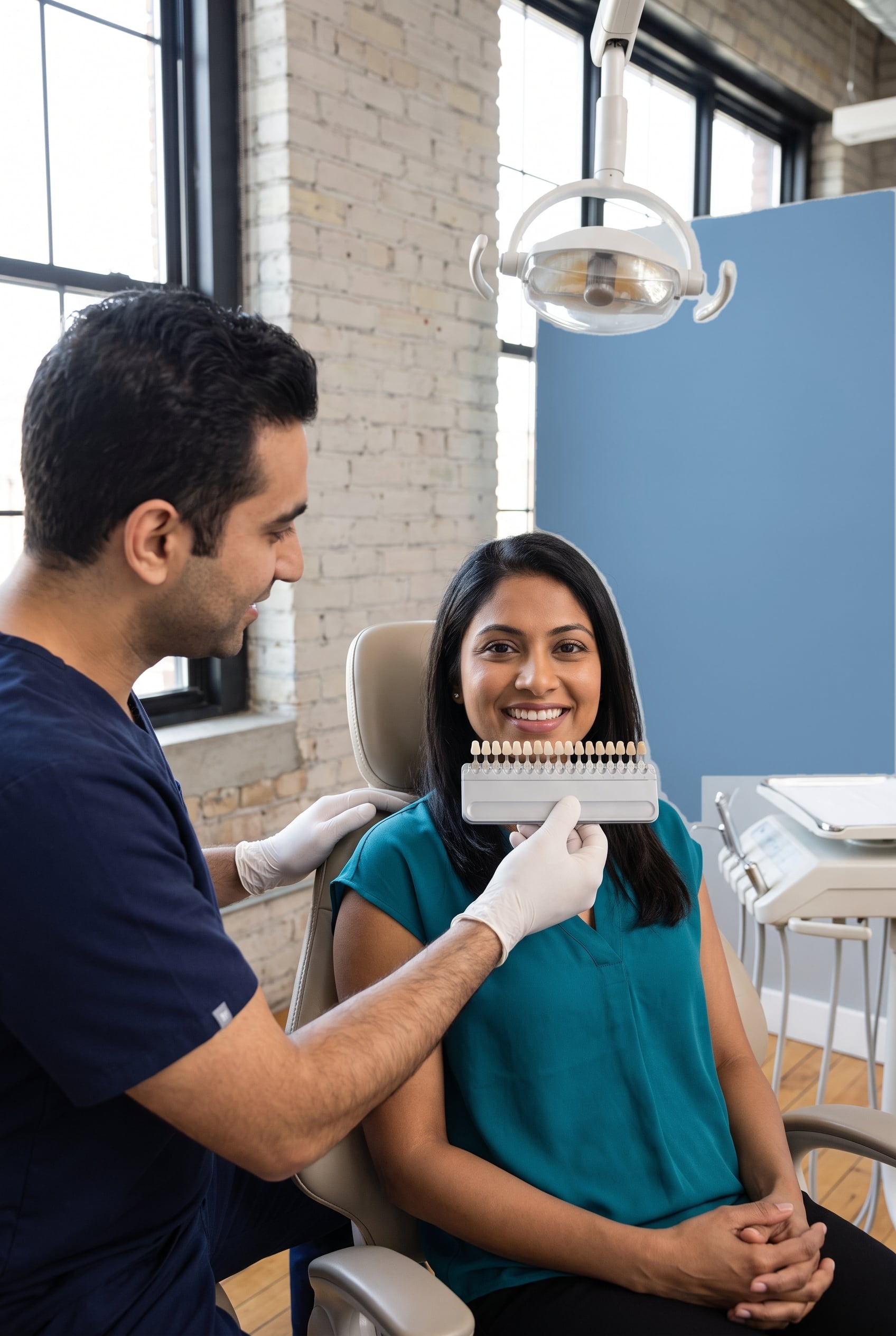
Your dentist selects a composite resin shade that matches the natural color of your surrounding teeth. The tooth surface is lightly roughened and treated with a conditioning solution. This helps the bonding material adhere securely. In most cases, no anesthesia is needed.
Step 2: Application and sculpting
The putty-like resin is placed on the tooth and carefully shaped. Your dentist builds up the material to restore the natural contour of the tooth, close a gap, or cover an imperfection. You can usually see the shape taking form during this part of the visit.
Step 3: Curing and polishing
A high-intensity curing light hardens the resin in a matter of seconds. The bonded area is then trimmed, shaped, and polished so it matches the sheen and texture of the surrounding enamel.
The whole process usually takes about 30 to 60 minutes per tooth. If you are having more than one tooth done, the visit will be longer. Your dentist can give you a time estimate for your specific case.
Does dental bonding hurt?
Most patients find bonding comfortable. The procedure is typically non-invasive, and many people do not need numbing. Your comfort still matters. If you would like numbing, local anesthetic is available. We also offer numbing gel, warm blankets, and noise-canceling headphones to help you relax during your visit.
If you have a history of dental anxiety, let the team know when you book. We can talk through each step before it happens so you know what to expect.
What about recovery and aftercare?
There is no real recovery period after bonding. You can usually return to your normal routine right after the visit. Because the material is set and polished in the office, most people do not need a temporary restoration or a second appointment.
Bonded teeth are durable but not indestructible. Your dentist will give you guidance on caring for them. In general, many patients are advised to avoid biting hard objects such as ice, pen caps, or fingernails, and to be careful with hard foods. Keeping up with brushing, flossing, and regular checkups also helps the bonding last. Over time, bonding can stain or chip, and it may need to be polished or repaired. Your dentist can explain how often to schedule follow-up care.
How much does dental bonding cost in West Covina?
The cost of dental bonding depends on several factors, including the number of teeth being treated, how much material is needed, and the complexity of the repair. Your dentist will explain the cost of your treatment during your consultation, before any work begins.
Bonding is often considered one of the more cost-effective cosmetic dental options, especially for small repairs. For new patients without insurance, our $59 New Patient Special includes a comprehensive exam, digital X-rays, and a professional cleaning. This special helps you get a full evaluation before deciding on any treatment, including bonding.
Insurance and payment options
Whether insurance will cover bonding depends on your plan and the reason for treatment. Cosmetic-only bonding is less likely to be covered. Your actual benefits depend on your plan’s terms, so we recommend checking before your visit.
Harmony Dental Care accepts PPO and indemnity plans, as well as Medi-Cal, Denti-Cal, Smile California, and CalOptima. We work with most major dental insurance carriers and can help you make the most of your benefits. Our team also handles many of the details, including authorizations and claims for Medi-Cal, Denti-Cal, and Smile California members. CalOptima dental is provided directly at our office, so no referral is needed.
We offer a complimentary insurance eligibility review before your visit. This lets our team check your coverage and explain what your plan may pay so you can plan ahead.
If you do not have insurance, or if you want to spread out the cost, we offer several payment options:
- Flexible financing with affordable monthly payment plans for elective and major procedures
Ask our team about the options that fit your situation during your visit.
Why patients choose Harmony Dental Care for bonding
Harmony Dental Care has served the West Covina community for 20 years. Our practice was built around the idea of treating every patient like family, and we aim to make each visit calm and well organized.
Our dentists, Dr. Nguyen (DMD) and Dr. Khaef, both focus on cosmetic and restorative care, and both are committed to continuing education. Dr. Khaef uses bonding materials and color-matching techniques to create repairs that blend with your natural teeth. Dr. Nguyen also provides cosmetic and restorative treatment, so you can talk with either dentist about your goals.
Our office uses digital tools that support bonding work, including 3D digital X-rays, 3D scanners, digital impressions, and CBCT imaging. Digital impressions and imaging help your dentist plan the work and check the results.
Some other reasons patients choose us:
- Same-visit care for many bonding repairs, so you may not need several appointments
- Insurance support from a team that helps you understand and use your benefits
- Payment options for patients who want to plan their cost
- A comfort-focused approach, with numbing options and relaxation tools available
How do I book a dental bonding visit in West Covina?
You can book online or call us at (626) 858-3305. We welcome new patients of all ages. If you are new to our office, you can start with the $59 New Patient Special, which includes a comprehensive exam, digital X-rays, and a professional cleaning for patients without insurance.
Our office is at 148 N Grand Ave, West Covina, CA 91791. We are open Monday through Friday, 9:00 AM to 6:00 PM, and closed on Saturday and Sunday. Bonding is often completed in a single visit, so we can usually schedule you quickly once we know what you need.
When you call or book, you can tell us whether you have a chipped tooth, a crack, a gap, or discoloration, and we will find the right time for your visit.
Questions about dental bonding
What is dental bonding?
Dental bonding is a procedure where a tooth-colored composite resin is applied to a tooth, shaped, hardened with a curing light, and polished. It is used to repair chips, cracks, gaps, and discoloration. Most bonding visits take about 30 to 60 minutes per tooth.
How much does dental bonding cost in West Covina?
The cost depends on how many teeth are treated and how much material is needed, so your dentist will give you a price during your consultation. For new patients without insurance, the $59 New Patient Special includes an exam, digital X-rays, and a cleaning. Call (626) 858-3305 for details.
Does insurance cover dental bonding?
Coverage depends on your plan and the reason for treatment. Bonding needed for structural reasons, such as a chipped or cracked tooth, may be partly covered, while cosmetic-only bonding is less likely to be. We offer a complimentary insurance eligibility review before your visit.
Is dental bonding painful?
Most patients find bonding comfortable, and many do not need numbing. Local anesthetic, numbing gel, warm blankets, and noise-canceling headphones are available if you want them. Let the team know if you feel anxious so they can explain each step.
How long does dental bonding last?
Bonding is durable, but it can stain, chip, or wear over time. How long it lasts depends on your habits, such as biting hard objects, and on regular brushing, flossing, and checkups. Your dentist can tell you how often to have it checked.
What is the difference between dental bonding and veneers?
Bonding is usually more conservative, needs little or no drilling, and can often be done in one visit. Veneers are thin shells that cover the front of the teeth and often require more preparation. Your dentist will recommend the better option for your situation.
Can I get dental bonding on the same day as my visit?
Many bonding repairs can be completed in a single visit, so you may not need a temporary restoration or a second appointment. Call (626) 858-3305 or book online, and our team will check the schedule for you.